
The Engine.Or, how a small team in Lahore built a SaaS factory that will run for the next ten years.
Pakistan can build the next software engine.
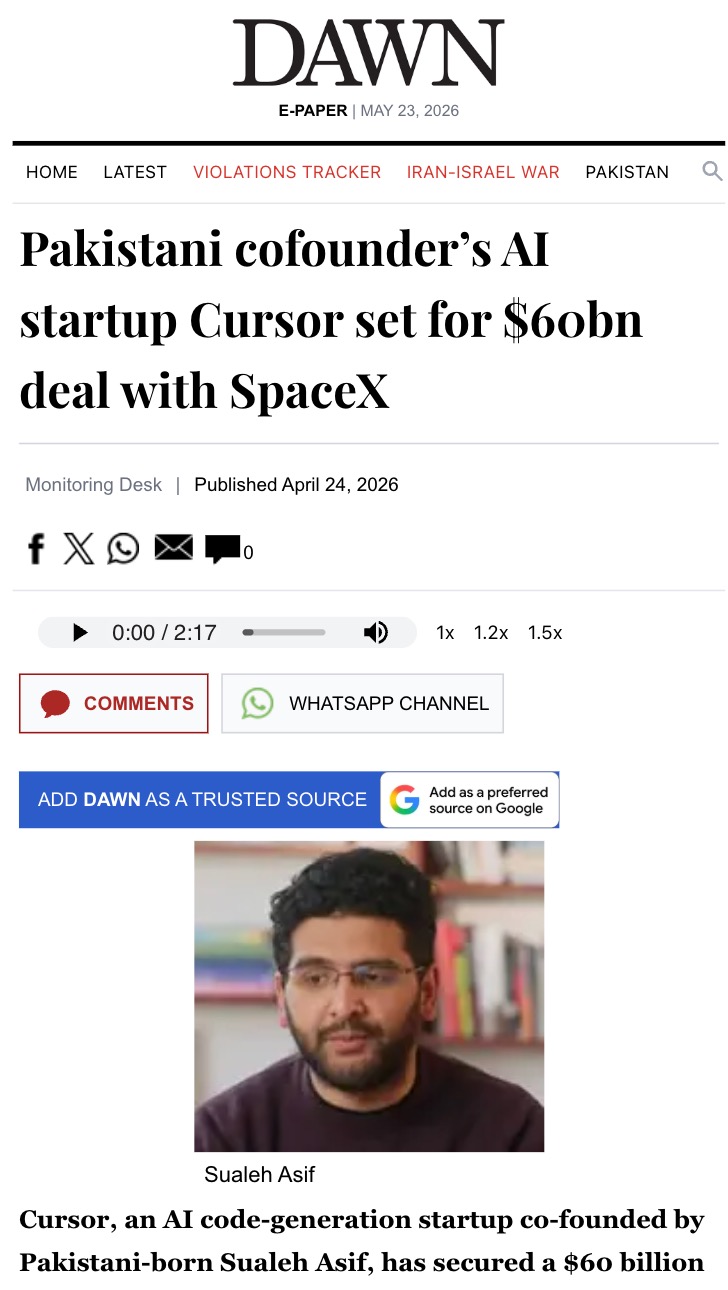
The world just got another reminder: Pakistani talent is not watching the AI wave from outside. DAWN reported that Cursor, co-founded by Pakistani-born Sualeh Asif, was tied to a reported SpaceX deal at a scale most software founders only dream about.
We are not saying we are Cursor. We are saying the standard has changed. Software built by Pakistani founders can become strategically important, globally noticed, and worth acquiring.
This article is our version of that belief: not one product, not one lucky launch, but a SaaS factory built from Lahore. CalendarJet, MamaSign, WittyForms, MoonPush, HiringCat, and the tools still coming next all sit on one engine.
Big vision does not have to mean waste. Our bet is simple: own the infrastructure, keep the team small, let AI agents absorb the operational load, and build a portfolio of tools that can compound for years.
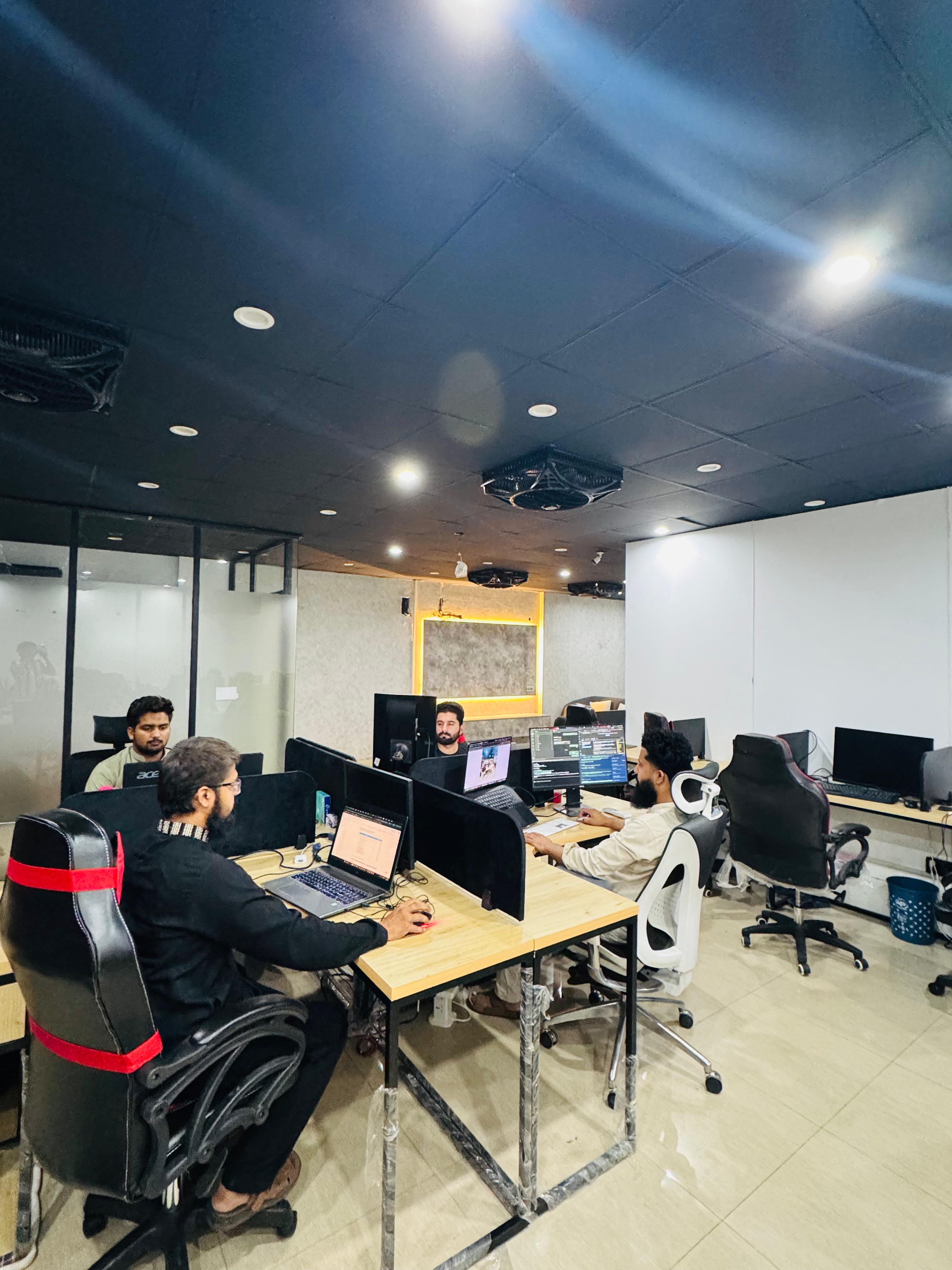
If you have ever wondered how a small team quietly runs a portfolio of SaaS products without burning out, burning through cash, or going dark after the first launch, this is the story. It is not a story about any one product. It is the story of the machine underneath all of them, and why it is built to outlast almost anything we throw at it.
01 / The OperatorTen years in the search trenches, plus a quiet past in ethical hacking.
My name is M. Aamir Mursleen. I have spent the last decade working in SEO, mostly in the deep end of it. I started in 2015 at Top Study World and grew the site from 20,000 pageviews a month to over 528,000. From there I moved into agency work, then ran SEO at Cryptonary in London, one of the bigger crypto publications on the internet. Along the way, my work appeared on Semrush and Ahrefs, two of the biggest and most trusted companies in the SEO world.
Google NLP, before AI search became the headline.
In 2019, I wrote for Semrush about using Google's Natural Language API to understand entities, salience, and content context. That NLP layer became one of the practical foundations for how modern SEOs think about AI-assisted relevance and Google ranking.
Read the Semrush article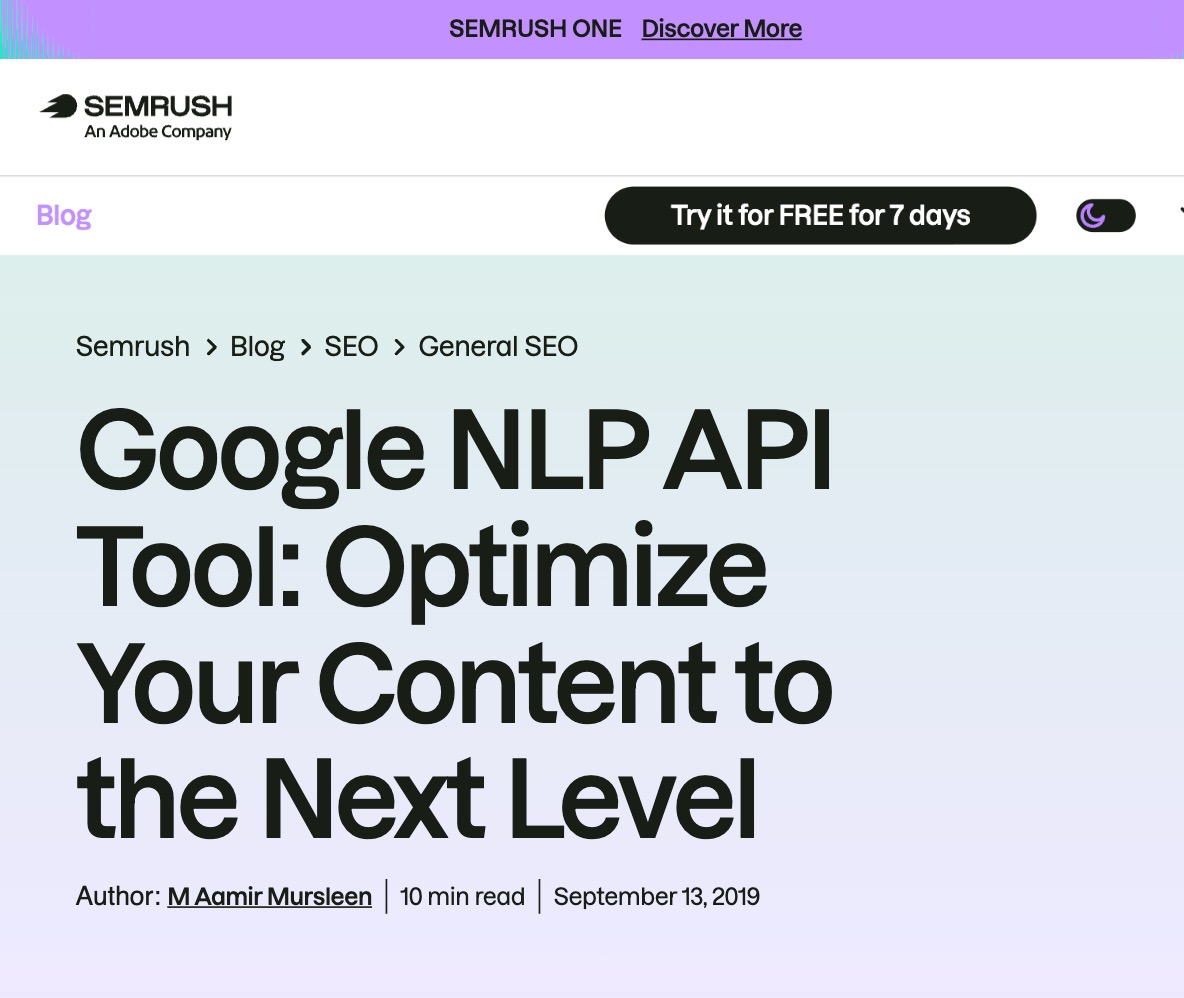
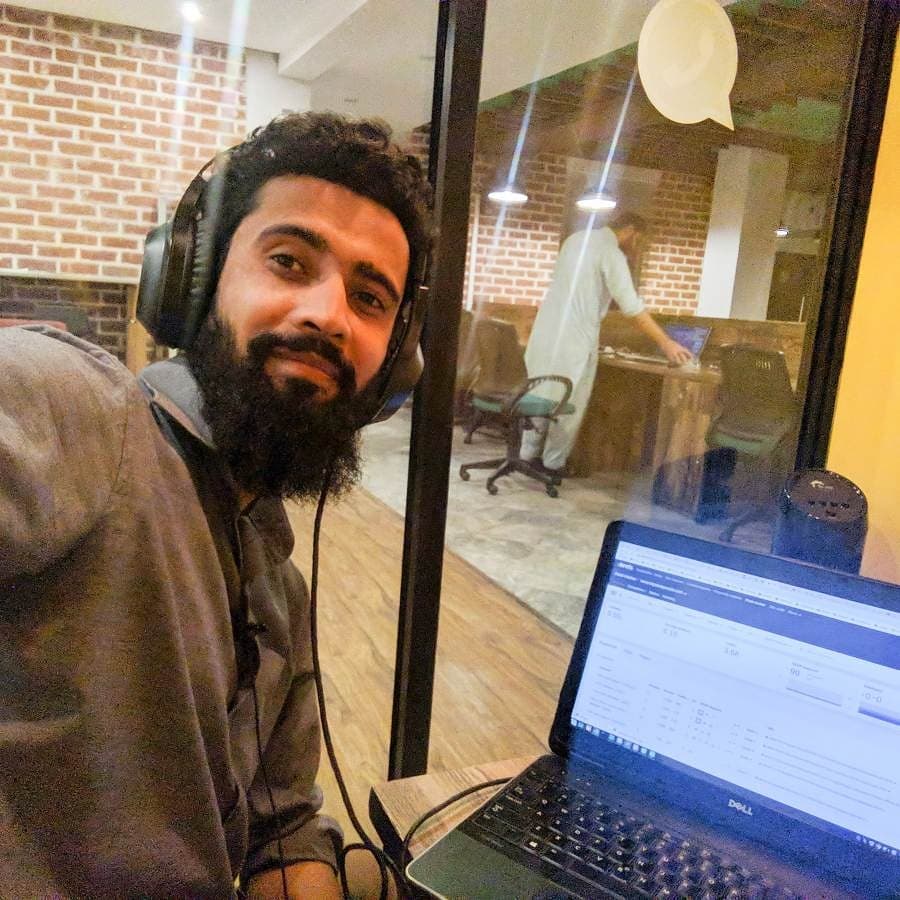
Ahrefs showed this SEO work to its own marketing audience.
This matters because Ahrefs is one of the industry's core SEO data companies. The image connects the story to real public SEO work, experimentation, and recognition from a company SEO professionals already understand.
There is also a chapter of my background that does not show up on a resume cleanly. I used to do ethical hacking. Penetration testing. Breaking into things on purpose so they could be patched before someone with worse intentions found the same hole. That part of my history is the reason the rest of this post is even possible. When you have spent time on the offensive side, you build the defensive side very differently.
02 / The CompanyOne Texas-registered holding company. Five live products. One agency that funds it all.
Everything we build sits under a single roof: CalendarJet LLC, registered in Texas, United States. Every product, every domain, every dollar of revenue, every contract flows through that one company. It is not a loose collection of side projects. It is a real holding company with real corporate structure. You can pull up the franchise tax record on the Texas Comptroller's site yourself.
Funding the whole thing is Nafran LTD, our digital marketing agency. Nafran is not a freelance side hustle. It is a real, registered, UK-based limited company. You can pull up the record on the UK government's Companies House yourself.
So the structure is transatlantic. A UK-registered marketing company (Nafran LTD, London) profitably funding a Texas-registered SaaS holding company (CalendarJet LLC). Two real entities. Two government registries. Two clickable proofs. No "we're an LLC, trust us" handwave.
And then there is BloggersFunda. This is the part of the operation I am most proud of, and the part that explains everything else.
BloggersFunda is a community of 150,000 members. For four straight years, I have dropped a new SEO tip every single night at 9 PM. No exceptions. Not when I was traveling. Not when I was sick. Not when I was launching another company. Not on weekends. Not on holidays. Four years. Zero missed days.
I bring this up because it is the same consistency we put into everything else we build. The products we ship behave the way I show up at 9 PM. Quietly. Predictably. Every single day.
We are not a SaaS company with a marketing problem. We are a marketing operation with a SaaS engine bolted onto the side.
03 / The PortfolioFive live products, each going after a giant.
We currently run five SaaS products in production. Every single one of them is taking aim at a company that already dominates its category. We did not pick small, safe markets. We picked the biggest ones we could find, because if the engine works the way we believe it does, the size of the market we go after does not matter.
These are not side experiments. They are not abandoned weekend projects sitting on a dead GitHub page. They are live products with real users, and they share a single infrastructure stack that I will get to in a minute.
04 / The PipelineWhat is coming next.
Because the engine is built the way it is, we get to keep shipping. The pipeline is long. A few of the next ones:
05 / AIWe were working with NLP before AI became the headline.
A lot of founders started using AI in 2023. Our timeline started earlier: Google NLP in 2019, GPT-3 in 2020, and then ConversionAI/Jasper in 2021.
The first layer was entity and salience work through Google's Natural Language API in 2019. Then GPT-3 arrived in 2020, when most people still treated prompts as a curiosity. By 2021, we were using ConversionAI, before it rebranded as Jasper, and plugging these tools into content briefs, ad copy variants, translation between English and Urdu, keyword expansion, and content cleanup at scale.
That gave us a practical head start that I do not think most founders fully appreciate. We do not have an AI transformation plan because AI and NLP workflows were already part of how we operated before the market caught up. AI is not a feature we are bolting on. It is how we have been building for years. The products we build assume AI in the workflow, because that is the only way we know how to build.
06 / The HardwareWhere everything actually lives.
I do not trust managed hosting that hides what is happening underneath. I want to know what is running, where it is running, and what is touching what. So we run our own dedicated server at Hetzner, in their German data center.
This is the actual machine, with no marketing dust on it:
- CPUAMD Ryzen 9 7950X3D16 cores / 32 threads
- Memory128 GB DDR5high-speed, modern
- Storage2 x 1.92 TB NVMe (Gen4)RAID 1, datacenter SSD
- Network1 GBit/s, unlimitedredundant, Juniper
- HypervisorProxmox EnterpriseVM isolation
- SecurityCrowdSec (paid) + Firewallalways on
- Backups4 separate locationsR2 / Backblaze / GDrive / Proxmox
- SLA99.9% network availability24/7 on-site service
This chip is unusual. It is built with an asymmetric design: 8 cores are wrapped in AMD's 3D V-Cache for memory-heavy workloads with minimum latency, while the other 8 cores are tuned for higher clock speeds. We route different jobs to the cores that fit them best. Database queries get the cache. Real-time API responses get the clock speed. Most hosts do not let you think this hard about workloads. We get to.
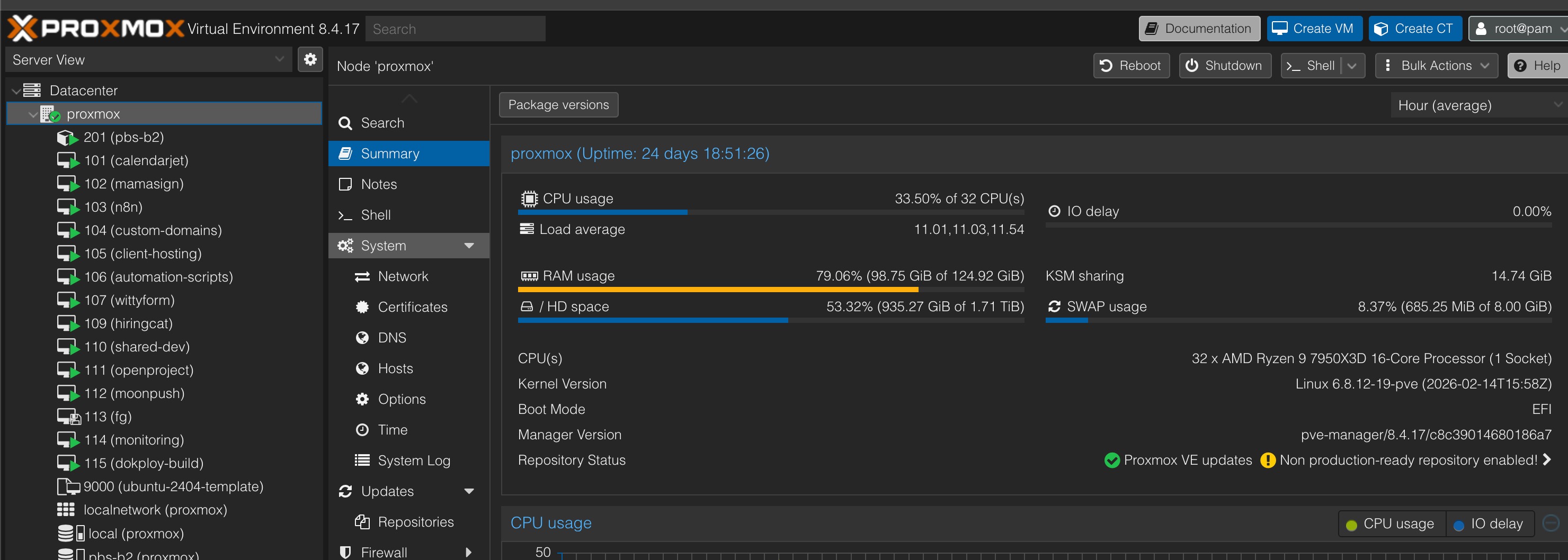
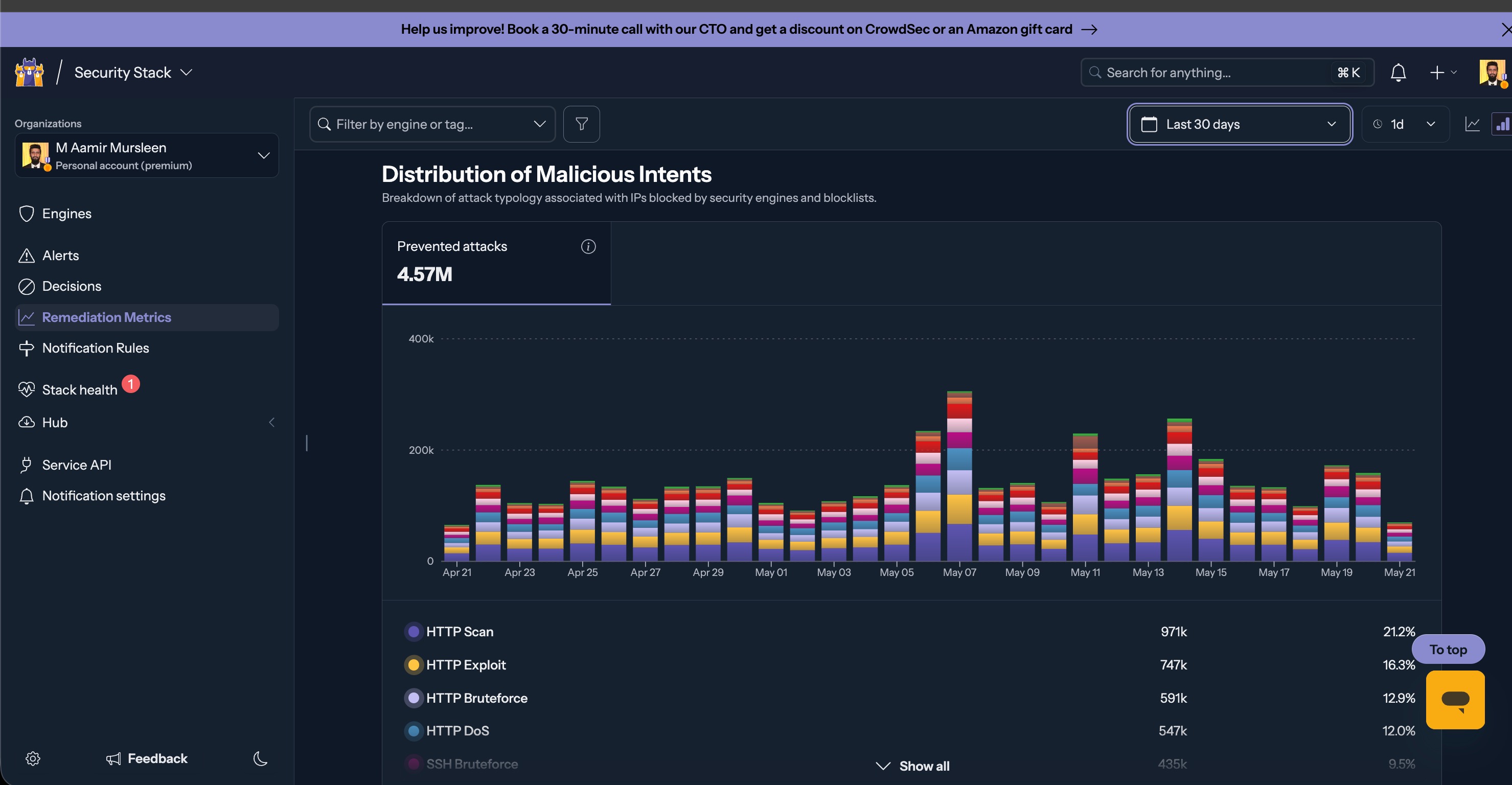
Every product gets its own completely isolated VM on top of this hardware. CalendarJet cannot see MamaSign data. WittyForms cannot touch CalendarJet. They are walled off from each other at the hypervisor level. If one product ever got compromised in some worst case scenario, the rest stay completely untouched.
And because of how Proxmox is set up, we can scale RAM, storage, and CPU for any VM instantly, with zero downtime and zero migrations. A traffic spike at 2 AM does not need me on a call with a hosting provider. It needs about thirty seconds.
07 / The AgentsThe team that never sleeps.
This is the part most founders never talk about, because most founders do not have it.
Sitting on top of the infrastructure, we have a layer of specialized AI agents doing the work that would otherwise need a small DevOps team. These are not chatbots. They are autonomous workers, each one focused on one job, running constantly.
These agents never sleep, never take holidays, never miss a Sunday alert because someone was at a wedding. They cost almost nothing to run and they get better every time we tune them.
The next generation of agents we are building does not use an API. We are using a different method. Very few people in this space are doing it yet. I am not going to spell it out in a public post, but it changes the cost structure of running agents at scale by a factor most people would not believe if I wrote it down. When it ships, you will see it across every product we run.
08 / The MathWhy this runs for ten years.
Most SaaS companies die because the unit economics catch up with them. Their hosting bill grows faster than their revenue. They have to keep raising. They have to keep pushing prices. They get squeezed by AWS, Vercel, or whatever managed service is sitting between them and their users with its hand out.
We are not in that race, and here is why. Most of the line items that quietly kill SaaS margins, we simply do not pay. We built our own tools from scratch, or we use open source where good open source exists. That single choice removes most of the recurring fees that drag other startups down.
Here is what we do not pay for:
- Product outputsOpen source libraries and our own renderers. PDFs, exports, reports, booking assets, hiring screens, and customer-facing files are generated inside our own stack instead of paying a vendor toll for every output.
- Email deliveryWe run our own mail server. No SendGrid bill. No Mailgun overage. No Postmark per-send pricing. Transactional, marketing, notifications, all from our infrastructure.
- BandwidthHetzner gives us unlimited traffic on a 1 Gbit/s line. No overage fees. No surprise bill on the morning after a launch goes viral.
- BackupsCloudflare R2, Backblaze, Google Drive, plus Proxmox's own incremental snapshots. Four locations, all at storage-tier pricing, shared across the whole product portfolio.
- DevOps teamReplaced by the AI agents from the section above. No headcount, no on-call rotation, no salaries scaling with infrastructure.
- Software stackBuilt from scratch or assembled from open source. We do not rent our own product back from a vendor every month.
Every dollar we do not send out is a dollar that stays inside the engine. That is the quiet, unglamorous secret that lets us host more SaaS products on the same hardware without our cost curve ever bending the wrong way.
The math underneath us looks like this:
The cost of hosting an additional SaaS on this engine approaches zero once the hardware is paid for. The agents handle the work that would otherwise need three full-time engineers. Backups across four locations cost us almost nothing. Email costs us almost nothing. Product outputs cost us almost nothing. Nafran LTD pays the boring bills while the products grow.
This is not a sales line. It is just what the math does when you refuse to pay middlemen.
09 / The TeamNine people. Shipping like a hundred.
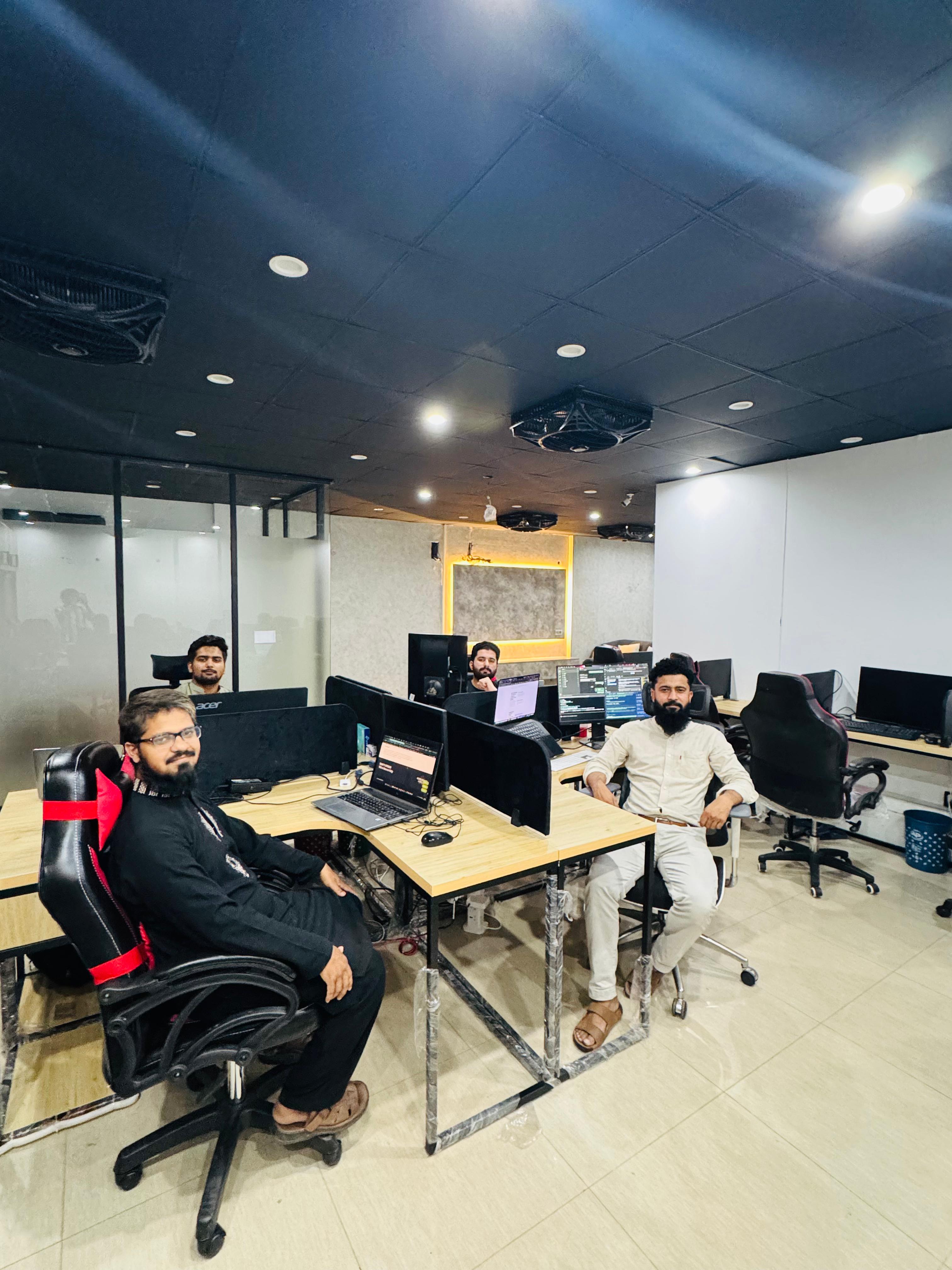
Here is the part that should not add up, but does. Our entire team is nine people. Not ninety. Not nine hundred. Nine.
We ship at a pace that should require a hundred-person company. Five live SaaS products in production. A long pipeline of more in build. A marketing agency profitably running on the side. A community of 150,000 people to show up for every night at 9 PM. Client work, content, ads, design, support. All from a team of nine.
The reason this works is the entire post you just read. The Hetzner box doing the work of a managed cloud team. The AI agents doing the work of a DevOps team. The open source stack doing the work of vendor invoices. Five years of AI workflow experience doing the work of an "AI transformation strategy." Nafran LTD doing the work of investor funding.
Subtract any one of those layers and the math breaks. Stack all of them, and nine people stops feeling small. It starts feeling like exactly the right number for what we are building.
Most companies add people to ship faster. We added leverage instead, and kept the team tight.
10 / ClosingA factory, not a lottery ticket.
A lot of founders build SaaS like they are buying a lottery ticket. One product. All the eggs. Hope it hits.
We did the opposite. We built a factory.
That factory is quiet, it runs cheap, it has been shaped by NLP and AI workflows since 2019, and it is engineered to outlast almost anything we throw at it. Every product we ship from here on rides on top of it. CalendarJet rides it. MamaSign rides it. WittyForms, MoonPush, HiringCat, and every tool still in the pipeline rides it.
If you have ever signed up for one of our products and wondered who is on the other side of the screen, that is the answer. A team of nine. A profitable agency. A community of 150,000 people I show up for every night. A long memory of how the internet actually works. A machine built to last.
Founder · Nafran LTD (London, UK · #13034569)
CalendarJet · MamaSign · WittyForms · MoonPush · HiringCat
BloggersFunda